Guide to Hydraulic Baler Machines
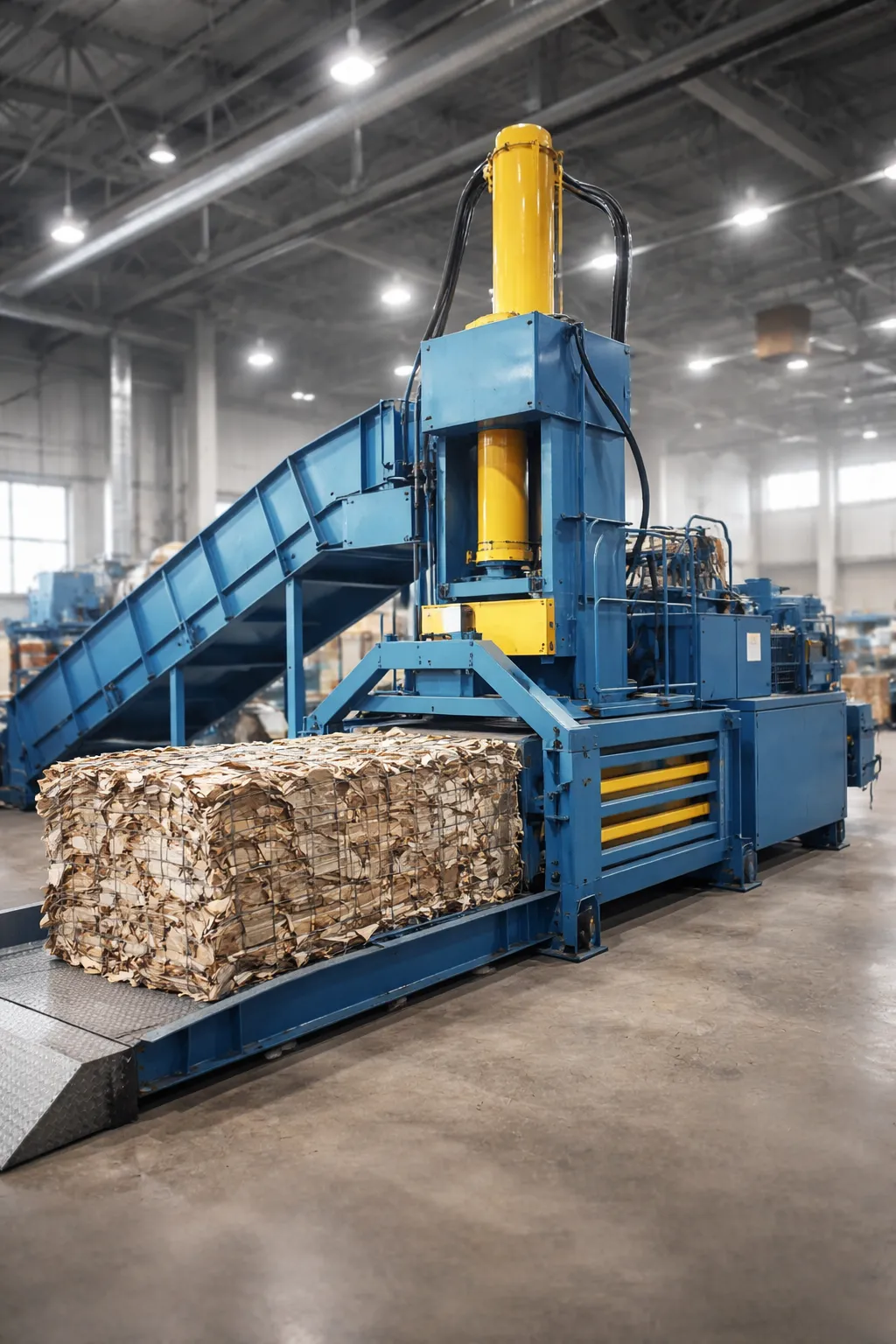
A hydraulic baler machine uses hydraulic force to compress loose material into compact bales. In recycling and manufacturing, this helps reduce storage volume, improve handling, and prepare material for transport or further processing.
The best baler depends on what the site handles every day. Metal scrap, cardboard, paper, plastics, mixed waste, production scrap, OCC, and turning scrap do not all need the same machine.
What a hydraulic baler does
A baler takes loose material into a chamber, compresses it with hydraulic force, and ejects the compacted bale. The goal is to reduce volume and create a more manageable form of material.
For metal recycling, baling can help with storage, transport, furnace charging, and material recovery. For packaging waste, it can reduce the space used by loose cardboard, paper, or plastics.
EPA’s sustainable materials management guidance describes recycling as a chain that includes collecting, sorting, processing recyclable products into raw material, and remanufacturing. A baler supports the processing and logistics part of that chain by preparing material for easier movement.
Main parts of the selection decision
The buyer should check material type, chamber size, bale size, bale weight, cycle time, motor requirement, production target, ejection method, available space, and maintenance access.
It is also important to check what happens before and after baling. If long scrap cannot be fed easily, a shear may be required first. If the bale is too heavy or unstable for the storage area, the output specification may need to change.
Manual Mini Balers
A Manual Mini Baler is a compact option for small-scale metal scrap compaction. It is useful when the site does not need a large machine but still needs proper hydraulic compression.
JHR product data lists manual mini configurations with bale sizes such as 6x6, 8x8, 10x10, and 12x12 depending on model and material. The machine is positioned for materials such as turning scrap, aluminium scrap, CRC scrap, OCC, tin, copper, steel, stainless steel, and lead scrap.
This type of baler suits smaller scrap yards, manufacturing plants, casting plants, and scrap processing centers where the main need is to control loose scrap without moving to a large PLC system.
Mini PLC Balers
A Mini PLC Baler is still compact, but it adds automated control. It is better suited when the buyer wants faster repeatable cycles, single-button or remote operation, and more consistent output.
JHR’s product data lists cycle times in the 36 to 42 second range on some Mini PLC configurations, depending on model. It is a practical step up from manual operation when the site needs more speed and control but does not yet require a jumbo machine.
Jumbo Manual and Jumbo PLC Balers
Jumbo Manual Balers are designed for higher-capacity metal scrap processing in a manual format. They are relevant when the buyer wants larger chamber and bale options without depending on PLC control.
Jumbo PLC Balers are better suited to larger scrap processing requirements where automated control, touch screen display, single-button or remote operation, and faster repeatable cycles are useful.
JHR product data lists jumbo models with bale sizes from around 12x12 up to larger formats depending on model. These machines are used for materials such as turning scrap, aluminium scrap, plate scrap, car body scrap, tin sheet scrap, oversized metal scrap, drum scrap, cardboard, paper, CRC, copper, steel, stainless steel, and lead.
High Density Balers
A High Density Baler is for buyers who need stronger compaction and dense bales. This matters in metal recycling where storage, transport, furnace charging, and handling efficiency are important.
JHR product data lists high-density machines for materials such as thick HR and CR sheet scrap, turning scrap, aluminium scrap, bazar scrap, oversized scrap, TMT scrap, light scrap, CRC scrap, car body scrap, tin scrap, copper scrap, steel scrap, stainless steel scrap, and lead scrap.
This category should be considered when the buyer is not just trying to bale material, but trying to increase density and reduce handling cost.
Super Jumbo Balers
A Super Jumbo Baler is a higher-output metal recycling machine. JHR lists it as a PLC-controlled baler with production capability up to 2 to 10 tons per hour, depending on material and configuration, and cylinder force up to 300 tons.
This is not a general small-yard machine. It is for larger metal scrap operations where cycle time, bale size, force, and regular production matter.
Continuous Balers
A Continuous Baler is relevant when the site needs regular feeding and sustained output. JHR product data lists continuous baler operation with remote control, feeding by grabber or conveyor, and high production capability depending on model and material.
This type of machine suits larger scrap processing centers, automotive factories, metal recycling facilities, and plants where material flow should not stop after every small batch.
Horizontal and Vertical Balers
A Horizontal Baler can be useful where the material flow, conveyor integration, and bale output are better suited to horizontal compression. JHR positions horizontal balers for materials such as cardboard, corrugated box scrap, leather, paper, PET bottle scrap, MSW scrap, cotton scrap, OCC, foam, plastic, newspaper, and other waste scrap.
A Vertical Baler is often considered where floor space is limited and the material can be handled in an upright compaction format. Vertical balers can suit waste recycling facilities, paper and OCC recycling, packaging industries, and small or medium scrap traders.
These machines are not interchangeable with every metal scrap press. The choice should follow material, feeding style, space, and desired bale format.
Double Action Balers
A Double Action Baler is designed for small quantities of metal scrap and is available in front door, sliding door, and top ejection formats. JHR product data lists these models for metal scrap processing, including turning scrap, aluminium scrap, CRC scrap, OCC, tin, copper, steel, stainless steel, and lead.
The difference between front door, sliding door, and top ejection matters for workflow. The buyer should choose based on loading, locking, ejection, and available working area.
Safety and maintenance should not be secondary
Balers use high hydraulic force. NIOSH guidance on baler hazards highlights risks from ram movement, jam clearing, maintenance, guarding, interlocks, and lockout procedures. HSE machinery guidance also emphasizes guards and safe isolation from electrical, hydraulic, and pneumatic power sources during maintenance.
For buyers, that means the machine discussion should include operator training, guarded access, procedures for jam clearing, power isolation, service space, and periodic inspection. A baler is not only a production machine. It is also a machine that people will load, clean, inspect, and maintain.
JHR product pages list durability features across selected balers, including HARDOX wear-resistant plates, hardened chrome-coated piston rods, honed pipes, high-quality hydraulic and electronic components, oil filtration, cooling systems, replaceable liners, anti-clogging alarms, and remote diagnostics on selected PLC models.
How to shortlist the right model
Use this sequence:
- Identify the main material and the difficult material.
- Estimate output per hour or shift.
- Decide the bale size and handling method.
- Check whether the scrap needs cutting or shredding first.
- Decide between manual, PLC, high-density, vertical, horizontal, double action, or continuous operation.
- Confirm space, power, feeding, ejection, maintenance, and safety requirements.
If the site handles oversized or long metal scrap, compare shear machines before finalizing a baler. If the site handles bulky material that needs size reduction, compare shredder machines. If the site produces chips or shavings, consider briquetting.
You can review the full hydraulic baler machine range or contact Jain Hydraulics Recycling with your material type, output target, and site layout.