Selecting the Right Hydraulic Scrap Baling Press Machine
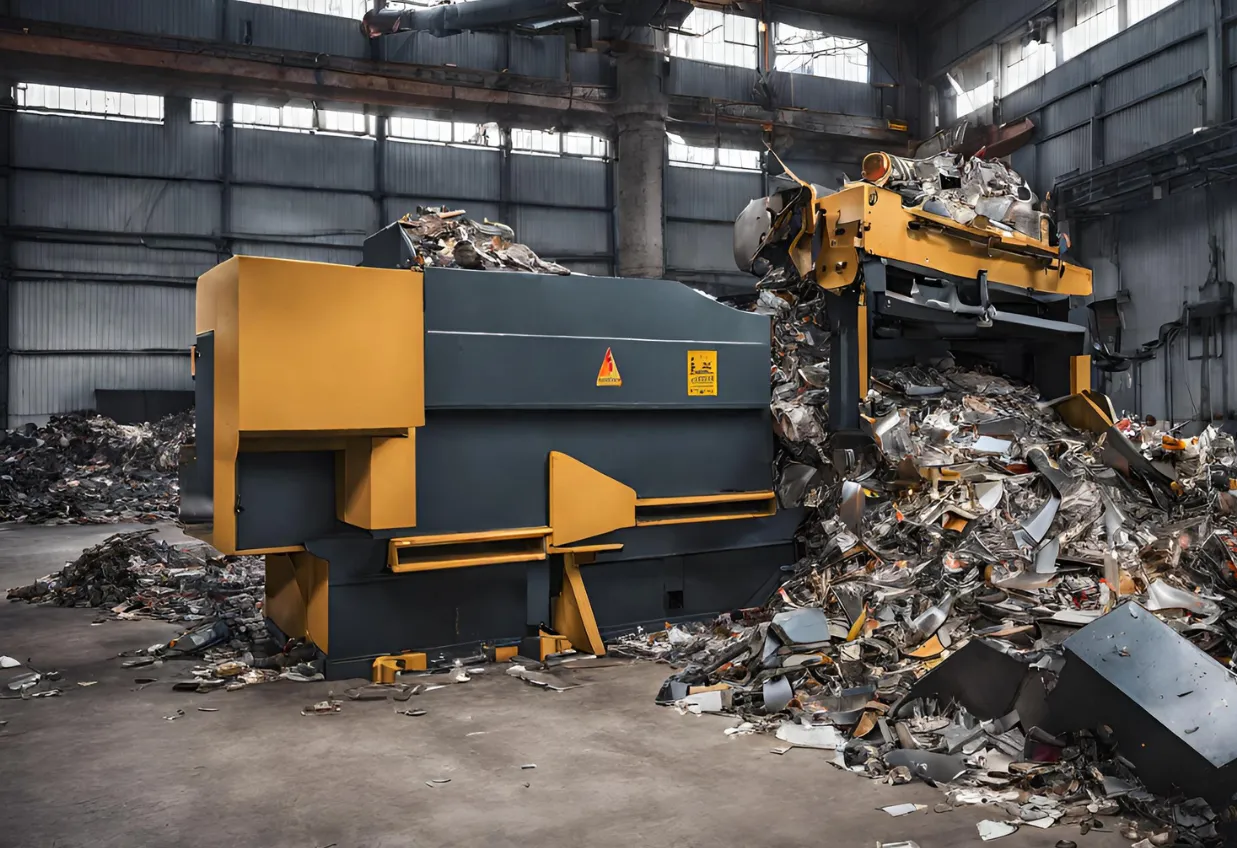
Choosing a hydraulic scrap baling press should start with the work the machine has to do every day. The right machine is not always the biggest one or the one with the most automation. It is the one that matches your scrap type, required output, bale handling method, available space, and operator workflow.
For a metal recycling yard, foundry, manufacturing unit, or waste processing facility, the buying decision should be made around the full scrap process, not only the machine name.
Start with the material, not the machine
Different scrap streams behave differently under compression. Light sheet scrap, aluminium scrap, turning scrap, CRC scrap, mixed metal, OCC, paper, and bulky recyclable waste all need different handling.
Before asking for a quotation, write down the main material and the difficult material. The difficult material matters because it is usually what causes slow feeding, poor bale shape, jams, or extra handling. For example, loose aluminium may need a different chamber and bale target than heavier MS scrap. Oversized metal scrap may need shearing before baling.
Jain Hydraulics Recycling balers are used across metal recycling facilities, manufacturing plants, scrap yards, casting plants, iron and steel facilities, and scrap processing centers. For compact metal scrap processing, a Manual Mini Baler or Mini PLC Baler can be suitable. For larger metal scrap volumes, compare Jumbo Manual, Jumbo PLC, High Density, and Super Jumbo machines.
Estimate the daily load honestly
Capacity should be based on a normal working day, not a peak day and not a brochure number taken out of context. If the machine is too small, operators wait on the baler. If the machine is too large, the buyer may spend more on power, space, and handling equipment than the site needs.
As a rough selection pattern, smaller yards and manufacturing units often start with compact manual or PLC machines. Medium and large scrap processors usually compare jumbo, high-density, or continuous machines. Sites that need faster cycle control and repeatability should look at PLC-controlled models.
JHR product data shows this difference clearly. A Manual Mini Baler is built for compact, small-scale metal scrap compaction. A Mini PLC Baler offers a similar compact advantage but with automated control. A Super Jumbo Baler is for high-output metal recycling applications, with production capability listed up to 2 to 10 tons per hour depending on material and configuration.
Decide how much automation you actually need
Manual machines are useful where the buyer wants simpler operation and direct operator control. PLC-controlled machines are more suitable where the buyer wants repeatable cycles, remote operation, lower manual intervention, and more consistent output.
A Jumbo Manual Baler can work well for businesses that need larger capacity without relying on PLC control. A Jumbo PLC Baler is better when the site needs automated operation, touch screen control, and faster repeatable cycles.
This is not only a technology decision. It is also an operator decision. If operators change frequently, automation can reduce variation. If the site has skilled operators and wants simple control, manual operation may still be practical.
Look at bale size, bale weight, and handling
Bale size affects transport, storage, furnace charging, and customer acceptance. Bale weight affects handling equipment and stacking safety.
Do not choose a dense bale unless the site can safely move and stack it. HSE guidance on bale stacking notes that bale size, weight, density, shape, and material type all affect stack stability. In practical terms, the machine buyer should think about the forklift, crane, storage area, transport vehicle, and downstream buyer before fixing the bale target.
For high-density metal scrap requirements, the High Density Baler is more relevant than a general-purpose baler. JHR lists this machine for dense metal scrap processing, with options for different bale sizes and higher compaction force.
Check whether the scrap needs cutting first
Some scrap should not go straight into a baler. Long, oversized, or irregular material can slow down loading and affect compaction. In those cases, a shear machine may be needed before baling.
For rods, pipe, TMT bar, angle, channel, and similar scrap, an Alligator Shear can prepare material for easier handling. For mixed heavy-duty scrap, a Continuous Shear may be a better fit.
Do not ignore safety and maintenance
Baling equipment uses high-force hydraulic movement, so selection should include guarding, interlocks, operating procedures, and maintenance access. NIOSH guidance on balers and compactors highlights risks around ram movement, clearing jams, maintenance, guarding, interlocks, and lockout procedures.
For a buyer, this means the question should not be only “what is the capacity?” It should also be “how will operators feed, clear, maintain, and inspect this machine safely?” Ask about access points, guarding, operator controls, oil filtration, liner replacement, cylinder maintenance, and cooling arrangements.
JHR baler product pages list practical durability features such as HARDOX wear-resistant plates, hardened chrome-coated piston rods, honed pipes, hydraulic filtration, cooling options, replaceable liners, and anti-clogging or remote diagnostic systems on selected PLC models. These details matter because downtime is part of the real machine cost.
What to share before asking for a quotation
Before finalizing a baler, prepare these details:
- Material type and the most difficult scrap size.
- Approximate quantity per hour or per shift.
- Desired bale size and how the bale will be moved.
- Available machine area and feeding direction.
- Manual or PLC preference.
- Whether shearing, shredding, or briquetting is also needed.
If you already know these details, start with the full JHR hydraulic baler range and narrow the choice around actual site conditions.